
What Are Debtors and Creditors? Understand the Difference
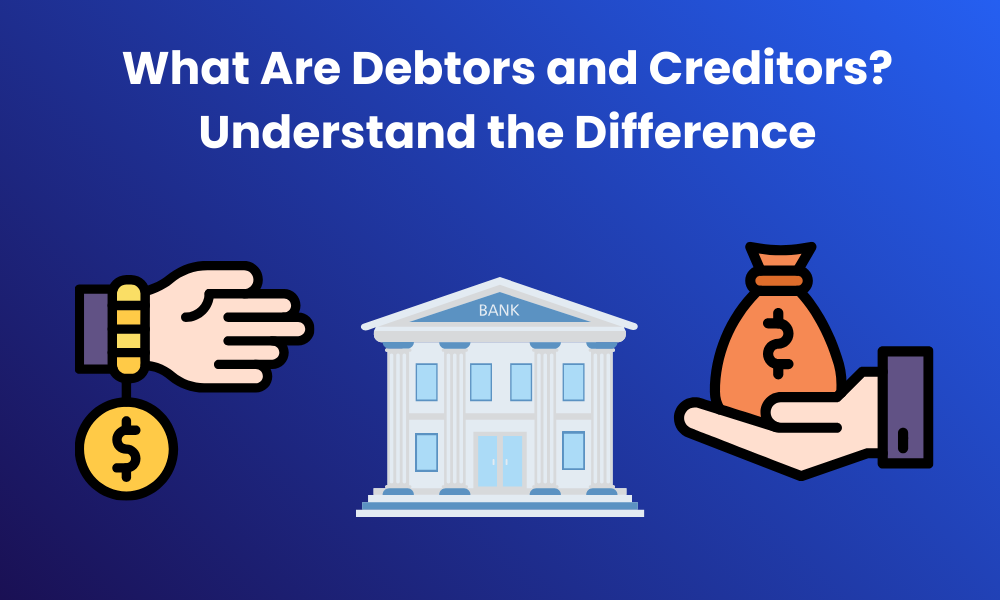
Many students get confused between Debit, Credit, Debtors and Creditors and often assume that debit means debtor and credit means creditor. This assumption is completely incorrect. In this blog, we will clearly explain these concepts with simple explanations and practical examples.
Definition of Debtors
Debtors refer to people who owes money to the firm on account of goods sold to them on credit. In other words,debtor are customers or purchasers who have purchased the goods from the dirm on credit.However, this does not include loans and advances granted by the firm to someone.
Definition of Creditors
Creditors refer to persons to whom the firm owes money due to the purchase of goods on credit from them. Thus, creditors are the suppliers from whom the business has purchased goods on credit. The term creditors does not include any loans and advances taken or availed by the firm. If the business or firm has taken a loan from a bank, then the bank is not considered a creditor of the firm.
Understanding Debit and Credit
Debit and credit are related to the types of accounts and the rules of accounting. They decide on which side of an account a transaction will be recorded.
- Debit and credit do not represent people
- They represent the effect of a transaction on an account
- Whether an account is debited or credited depends on the nature of the account and the transaction
Debit and Credit Are Not the Same as Debtors and Creditors
A common misconception is:
- Debit = Debtor
- Credit = Creditor
This is wrong.
A debtor or creditor can be debited or credited, depending on the situation. Debit and credit never change, but the balance of a debtor or creditor can change.
Difference between Sundry Debtors & Creditors
| Basis of Difference | Sundry Debtors | Sundry Creditors |
|---|---|---|
| Meaning | A debtor is an individual or entity that owes money to a business. | A creditor is an individual or entity to whom a business owes money. |
| Origin | Derived from the Latin word ‘Debere’, which means to owe. | Derived from the Latin word ‘Creditum’, which means to loan. |
| Nature | They have a debit balance to the firm. | They have a credit balance to the firm. |
| Category | They are shown as assets in the Balance Sheet under Current Assets. | They are shown as liabilities in the Balance Sheet under Current Liabilities. |
How Assets and Liabilities Behave
Assets
- Increase in assets → Debit
- Decrease in assets → Credit
Liabilities
- Increase in liabilities → Credit
- Decrease in liabilities → Debit
These rules are based on modern accounting rules, not golden rules.
Practical Example 1: Goods Sold on Credit
Transaction
Goods sold to Mohan for ₹15,000
Accounts Involved
- Mohan’s Account
- Sales Account
Analysis
- Mohan becomes a debtor, which is an asset
- Sales represent revenue
Effect
- Debtor (asset) increases → Debit
- Revenue increases → Credit
Journal Entry
Mohan Account Debit to Sales Account
Why Is Mohan Debited?
Even though Mohan is a debtor, he is debited because:
- Debtors are assets
- Increase in assets is always debited
This clearly proves that debtor does not always mean credit.
Practical Example 2: Cash Received from Debtor
Transaction
Cash received from Mohan ₹10,000
Accounts Involved
- Cash Account
- Mohan’s Account
Analysis
- Cash (asset) increases → Debit
- Debtor (Mohan) decreases → Credit
Journal Entry
Cash Account Debit to Mohan
Here, Mohan (a debtor) is credited, which again proves that a debtor can be credited.
Key Learning Points
- Debit and credit are related to accounts, not people
- Debtor and creditor are types of persons, not sides of accounts
- A debtor can be debited or credited
- A creditor can also be debited or credited
- Debit is always written first, credit comes next
- Debit is on the left side, credit is on the right side
Conclusion
The belief that debit means debtor and credit means creditor is completely wrong. Debit and credit depend on the nature of the account and the transaction, not on whether the person is a debtor or creditor.
Understanding this concept clearly will help you avoid mistakes in:
- Journal entries
- Ledger posting
- Exams and practical accounting work